Technology enhanced learning will have a tremendous impact on higher education, but early models of Massive Open Online Courses (MOOCs) won’t be game changers for most universities, said Mark Kamlet, University Professor of Economics and Public Policy at Carnegie Mellon University.
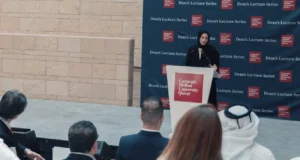
Kamlet, who served as provost at Carnegie Mellon for 14 years, spoke about some of the ways technology is changing higher education during the John Patrick Crecine Lecture Series in Social Sciences at Carnegie Mellon University in Qatar.
One of the problems with MOOCs—free courses broadcast to an unlimited audience via the web—is they don’t address a major shortcoming of large lectures: the lack of interaction between professors and students. Another concern is the lack of a revenue stream, since many early courses were offered free of charge to anyone wanting to sign up.
Kamlet said another approach to technology enhanced learning, “cognitive tutoring,” has been successful in engaging students in personalized learning opportunities. Carnegie Learning, for example, has helped students in grades 6-12 learn math through a web-based software that identifies their strengths and weaknesses.
He added that some universities, under intense budget pressures, will use web-based courses—especially those that are designed to be more interactive—to help reduce costs. Other universities, especially elite universities with large endowments, will use them to a greater degree to free up faculty time for seminars, advising, and other activities that will set them apart.