Summary
Giselle Reis, the area head of computer science and AI at Carnegie Mellon University in Qatar, has designed the computer science curriculum for a new Brazilian undergraduate institute, the Institute of Technology and Education (ITEC). The curriculum is modeled after CMU's undergraduate CS program, with a strong focus on practical, hands-on learning. ITEC is scheduled to open in 2027.
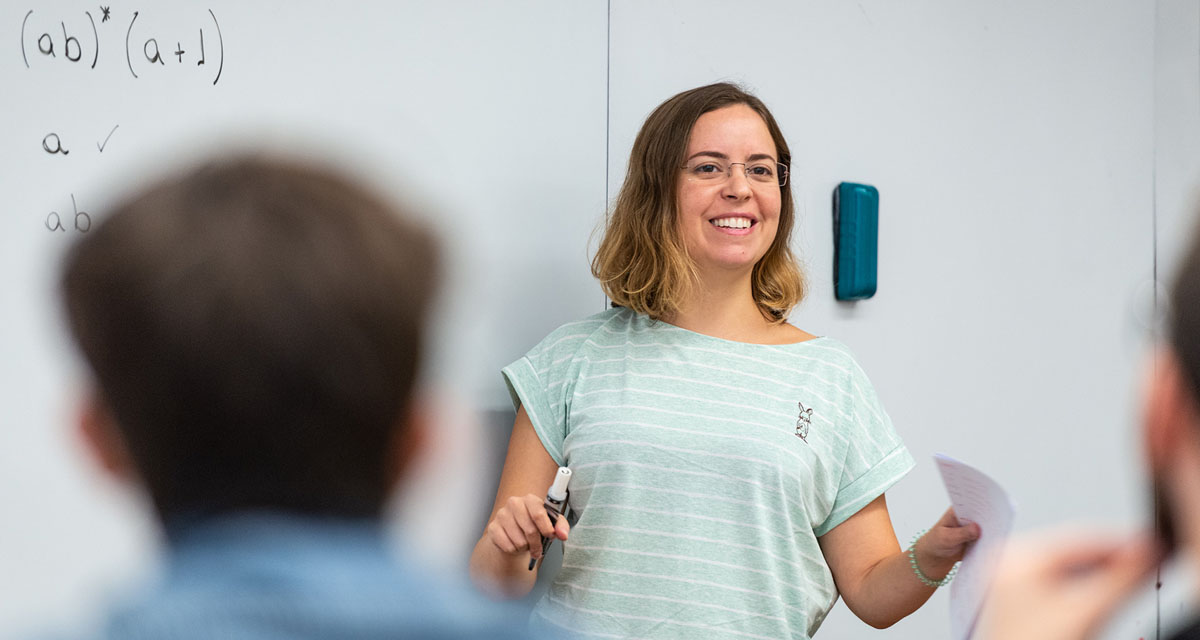
Giselle Reis, the area head of computer science and artificial intelligence at Carnegie Mellon University in Qatar (CMU-Q), was instrumental in creating a four-year computer science curriculum for a new undergraduate institute in Brazil.
The Institute of Technology and Education (ITEC) is a nonprofit initiative to foster a robust and vibrant research and innovation tech landscape in Brazil. The institute plans to devote more than two-thirds of its budget to scholarships to reduce financial barriers for promising students. Students at the institute will receive a bachelor of science degree in computer science at the end of their studies.
“The organizers would like quality teaching to be an integral part of ITEC, and this is similar to CMU-Q’s approach,” said Reis, who has been a member of the CMU-Q computer science faculty since 2016, and appointed area head in 2022. In May, she received the 2025 Meritorious Teaching Award.
Drawing from her experience at Carnegie Mellon, Reis embedded a strong focus on practical, hands-on learning into the academic framework. The curriculum she designed features dedicated weekly exercise sessions modeled directly after CMU’s undergraduate CS program.
“I was inspired by the way that we teach our computer science courses here at CMU-Q. We hold recitations or labs, which are sessions where students practice as faculty members guide them,” she said. “This kind of hands-on learning is very valuable.”
Beyond the classroom structure, Reis also recommended a system to support faculty and promote pedagogical excellence, a concept borrowed from CMU’s Eberly Center for Teaching Excellence. “At CMU, we have wonderful resources to support teaching, and this makes a huge difference to learning outcomes.”
The institute is slated to take in its first students in 2027.