We use cookies to ensure that we give you the best experience on our website.
صفحات جديدة باللغة العربية حصريًا قريبًا
يسرّنا الإعلان أننا نعكف حاليًا على إعداد صفحات جديدة مُصمّمة لجمهورنا الناطق باللغة العربية لتقديم تجربة استخدام متميزة ومحتوى مخصص وملائم أكثر لهم.
سنطلق هذه الصفحات المرتقبة قريبًا في الأشهر القليلة
Dedicated Arabic Pages Are Coming Soon
We're excited to announce that we are actively developing new, dedicated pages specifically designed for our Arabic-speaking users. These will offer tailored content and an enhanced experience.
Expected to launch in the next few months. Stay tuned!
Sample text 123
Business Administration
The Business Administration Program at Carnegie Mellon prepares students for a future fueled by data, powered by technology, and unleashed by human intelligence.
Business Administration at Carnegie Mellon
The Carnegie Mellon Bachelor of Science in Business Administration prepares students for leadership in a data-driven world. With a curriculum grounded in analytics, economics, and management, the program emphasizes problem-solving, teamwork, and innovation.
Students gain hands-on experience through research, experiential learning, and campus-wide collaboration, equipping them for careers in an AI-driven business landscape, including consulting, finance, technology, and beyond.
Business Administration students have identical graduation requirements as students at Carnegie Mellon in Pittsburgh. Graduates have CMU degrees, conferred from the U.S. campus.
Program at a Glance
With an emphasis on analytics and leadership development, students are prepared for the challenges of the AI-driven global business landscape.
Students explore five main areas during their degree programs:
Foundational courses in quantitative analysis
Business core courses in finance, accounting, communications, marketing, organizational behavior and operations management
Concentration courses in focused areas of business practice
A required minor in a second field
University core courses in general education
Through experiential learning opportunities, including project courses and leadership development activities, students put into practice the knowledge they learn in the classroom.
Most students pursue internships in organizations around Qatar, applying the knowledge they learn in the classroom to real-world scenarios.
Degree Program Details
Curriculum
Courses build on leading business practices while being informed by the innovative research of our faculty. The business curriculum is designed around core courses covering business, economics, mathematics, and statistics. Concentrations allow students to go deep in their specific business area of interest.
The first-year curriculum is devoted to building foundational analysis, communication, and context skills through courses in economics, math, and the liberal arts. First-year students also enroll in Business Science, a course that sets the foundation for their business education.
During sophomore and junior years, students concentrate on business core classes, electives, and general education while also selecting a minor.
Senior year includes a capstone course and is flexible so students can finish their degree requirements according to the pathway that suits their interests and ambitions.
College Honors
College Honors offers an opportunity for students to conduct an independent project and to prepare a formal thesis. College Honors is excellent preparation for graduate studies.
Business Administration students must complete a minor and a business concentration.
Required minor
The minor must be in a second field of study, and students can choose from several options delivered at the Qatar campus. Students are encouraged to explore their interests, and to develop an understanding of the world beyond business administration.
Concentrations
Students in Business Administration gain knowledge and expertise through a concentration in a specific area of business practice. Concentrations provide more focused preparation for career pursuits.
Concentration areas include:
AI in Business
Business analytics and technologies
Entrepreneurship
Finance
Global economics and business
Islamic business management
Marketing management
Operations management*
Product management*
Strategic management
*This concentration has some requirements that must be completed at the Pittsburgh campus.
AI in Business
The Business Administration Program is built on the philosophy that artificial intelligence should complement and enhance human innovation. This core principle is woven into the curriculum to prepare students to lead in a world driven by data and AI.
Students learn to apply AI to complex business challenges, from improving productivity to optimizing processes. Students who would like a deeper study of AI in business can pursue several options.
AI in Business
AI + Finance certificate
Computer Science minor
Individual AI-related courses, both within the BA program and in other disciplinary areas
Student Projects and Research
Research at Carnegie Mellon
At Carnegie Mellon, our mission is to investigate questions that will have a real impact on the world.
As our undergraduates engage in research, we encourage them to think about the question, “why does this research matter?” This is a hallmark of Carnegie Mellon’s approach.
Students in every major can engage in faculty-guided projects in their early years and pursue independent studies and senior thesis projects as they gain knowledge and experience.
What kind of projects do CMU-Q students do?
Would you buy that? Review variance and emotions
The impact of country-level factors (culture, corruption) on firm investment: A comparative analysis of shariah-compliant and non-compliant firms
The impacts of US tariff policies on Chinese industries: An analysis using input-output tables
Strategic adjustments in figure skating: Analyzing changes in technical difficulty based on short program rankings
National champion strategy: Strategic analysis of Baladna
Does access to digital financial services promote women’s economic empowerment: Evidence from rural Ethiopia
What is the effect of Dutch disease on Kazakhstan?
Educational inequality in the college admissions: The role of high school type in elite university access
Operational agility in times of disruption: Entrepreneurial approaches to process adaptation and performance resilience
Digital transformation in SMEs: A sector-wise comparative analysis in OECD countries
Psychological safety and employee voice: The role of hierarchical norms and voice appropriateness
Startup readiness assessment in Qatar’s incubation ecosystem
Can options market activities predict earnings outcomes? A machine learning approach
Challenging the efficient market hypothesis: Evidence from the Qatar stock market
Building a sustainable foundation: Replicating sustainability research in marketing
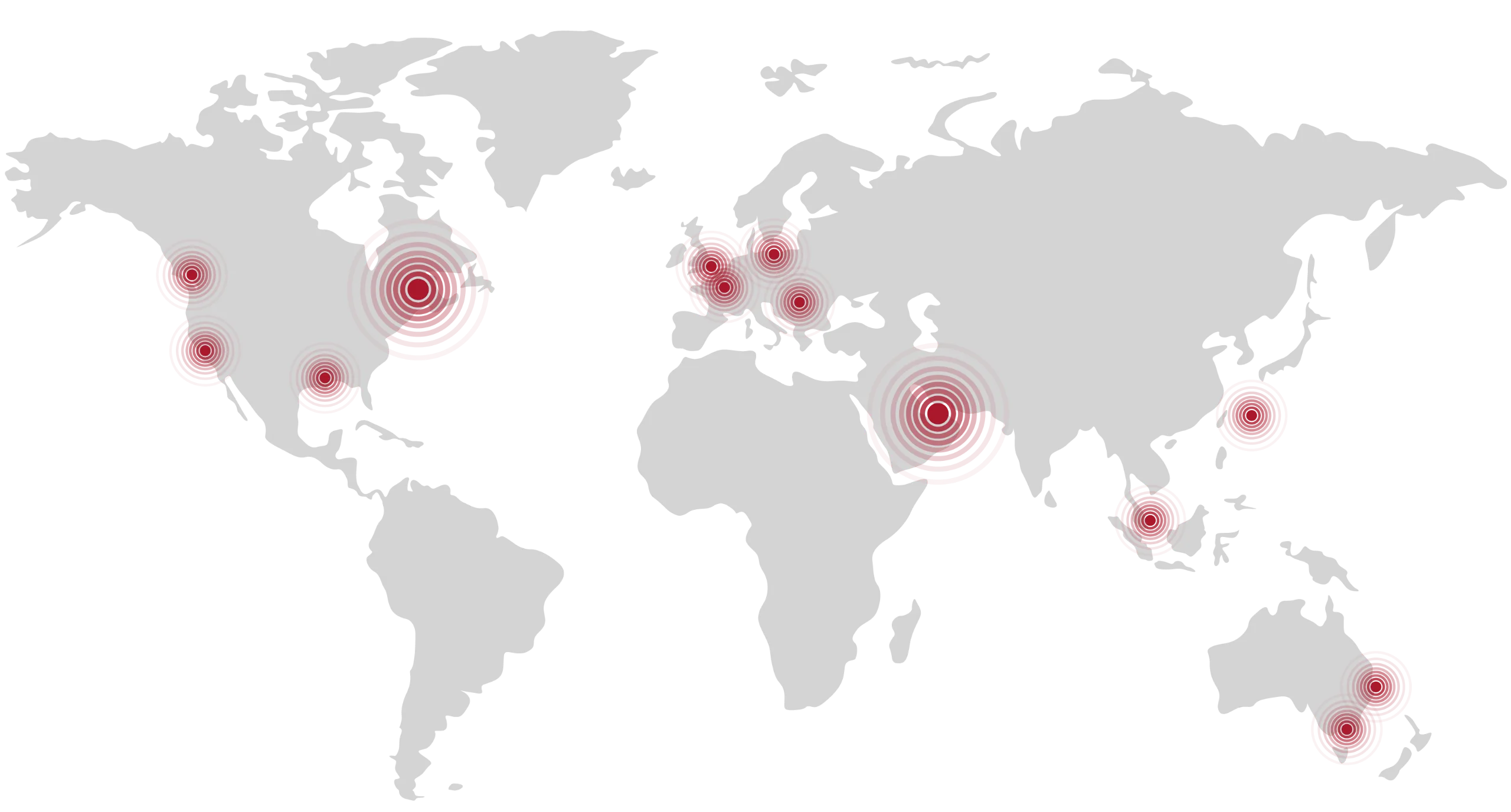
Graduates in business administration are highly sought after and pursue careers such as financial reporting analyst, management consultant, executive director, economics researcher, markets and clients executive, and corporate and markets analyst.
Qatar
Aamal Company
Vice Chairman and Managing Director
Boston Consulting GroupConsultant
Generation Amazing Foundation
Executive Director
GWC OfficialChief Financial Officer
Malomatia
Senior Manager, Strategy and Transformation
Microsoft
Account Technology Strategist
Ministry of Commerce and Industry
Deputy Undersecretary for Industry and Business Development
Ministry of Education and Higher Education
Secretary General, Qatar National Commission for Education,
Culture, and Science
Nakilat
Chief Commercial and Business Development Officer
National Museum of Qatar
Chief of Museum and Heritage Development
QAPCO
Head of Business Performance
Qatar Airways
Corporate Planning Manager
Qatar Development Bank
Executive Director Finance
Qatar Foundation
Head of Student Engagement
Alumni Engagement Manager
Director of Operational Excellence
Director, Marketing
Qatar Investment Authority
Head of Technology, Media and Telecom Investments
Qatar Museums
Director, Digital Experience
Qatar Shell
Senior Finance Advisor, Pearl GTL
Qatar University
Vice President of Administration and Financial Affairs
QatarEnergy LNG
Head of Corporate Planning
Roland BergerSenior Consultant
Whoop Labs QatarDirector
International
Abu Dhabi
Bain and CompanySenior Manager
Belgrade
Ministry of Finance – Republic of Serbia
Assistant Minister, Financial System Department
Berlin
Ebay
Head of M&A Business Integration
Dubai
Bain and CompanyAssociate Partner
Baker Hughes
Global Commercial Finance Leader
Monki BoxFounder and CEO
Swing Capital
Founder, Managing Partner
Houston
EY
AI Enabled Automation Manager
London
Citi
Citi Social Finance, Senior Vice President
Melbourne
Cricket Australia
Men’s Team and Operations Lead
Muscat
Energy Development Oman
Associate – Valuation and Planning
Petroleum Development Oman
Pension Fund Analyst
New York
Bain and CompanyAssociate Partner
BlackRock
Vice President, Financial Institutions Group
Meta
Product Strategy and Central Operations Manager
Spotify
Principal Product Manager
Singapore
Qatar Investment Authority
Head of Industrials
Sydney
Whale Logistics
Senior Financial Accountant
Toronto
BMO Capital Markets
Tech Lead, Generative AI and Machine Learning
Google
Public Sector Marketing Manager
RBC
Director, Corporate Banking
Further studies
Business Administration grads have furthered their studies
at elite institutions, including:
Brown University
Hamad Bin Khalifa University
Harvard University
HEC Paris
Imperial College London
London School of Economics and Political Science
Massachusetts Institute of Technology
New York University
Stanford University
University College London
University of Oxford
“Being a part of the Carnegie Mellon experience has been a privilege for me for so many different reasons. Thanks to CMU-Q and QF, I had access to a world-class education, the best resources, the best professors, the best peers, and a beautiful space in which to study.”
Nofe Al Suwaidi, Business Administration 2011, Secretary General, Qatar National Commission for Education, Culture, and Science, Ministry of Education and Higher Education
“The strong alumni network not only allows me to connect with alums in similar positions and learn from their experiences, but I can gain insights from alums in different positions and different industries and learn about their professional ecosystems.”
Farha Khan, Business Administration 2018, Engagement Manager, Mercor, MBA, Stanford University
“CMU-Q has pushed me to be where I am today. The quality of the faculty and staff, best in the world, the warm community between these walls, and the culture of diversity transforms your inner potential to tangible reality.”
Saleh Al-Raisi, Business Administration 2014, Chief Commercial Officer, Nakilat
“The environment here fosters a sense of curiosity and innovation, encouraging us to think critically and embrace the unknown. We were taught the foundation to navigate the complexities of our interconnected world.”
Abdulrahman Darwish Fakhroo, Business Administration 2024, Financial analyst, Qatar National Bank
Meet the Faculty
Faculty members include experts in fintech, algorithmic trading, mathematical/statistical modeling, Islamic finance, entrepreneurship, political economy, revenue management, supply chain, business applications of AI, machine learning and deep learning.