Summary
One year into a three-year grant from the Qatar Research, Development and Innovation (QRDI) Council, CMU-Q English faculty members Maria Pia Gomez Laich, Silvia Pessoa, and Thomas Mitchell are rolling out digital learning modules on Canvas alongside an overhauled first-year writing curriculum. The team adopts a strict "no-AI" foundational policy to ensure students build durable analytical and communication skills.
DOHA, QATAR — Carnegie Mellon University in Qatar (CMU-Q) faculty members have rolled out a scalable digital toolkit to support the teaching and learning of academic writing, marking the latest phase of a decade-long research initiative.
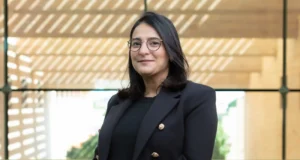
The research team includes CMU-Q faculty members Maria Pia Gomez-Laich, Silvia Pessoa and Thomas Mitchell, as well as postdoctoral fellow Bianca Brown. The initiative is funded by a three-year Academic Research Grant (ARG) from the Qatar Research, Development and Innovation (QRDI) Council.
Now entering its second year, the current project represents a strategic shift toward building a permanent, accessible digital instructional infrastructure for the campus and the wider academic community. At the center of the toolkit is a collection of short, animated videos that translate core linguistic and rhetorical concepts into intuitive visual frameworks. Among these are the “Onion Model” and the “I know–I see–I conclude” heuristic, both designed to help students move past simple description toward mature analysis and sustained argumentation.
Additional videos, developed in collaboration with CMU-Q faculty member Kira Dreher, focus on crafting plain-language summaries and designing research posters—key preparation for students presenting at CMU-Q’s annual Meeting of the Minds undergraduate research symposium.
The resources are housed within an embeddable Canvas course shell, allowing instructors across disciplines to integrate modules directly into their existing coursework.
“In the past, we went to disciplinary instructors’ classes to do workshops, and then we realized that was not sustainable,” said Gomez-Laich, associate teaching professor of English and lead principal investigator on the project. “We thought it would be better to start creating materials that professors could easily embed in their own classes.”
The ARG project builds on more than ten years of collaborative scholarship at CMU-Q, which began with Pessoa’s QNRF-funded SLATE-Q project. Through longitudinal studies of undergraduate writing and close partnerships with faculty in Information Systems, Business Administration, and History, the team has worked to identify and articulate the tacit conventions of disciplinary academic writing. This sustained inquiry culminated in their 2024 volume, Analysis and Argument in First-Year Writing and Beyond: A Functional Perspective, published by the University of Michigan Press.
As the grant enters its next phase, the researchers are expanding their materials into advanced courses, including capstone experiences such as the Business Administration program’s signature Management Game. The team is also compiling a regional corpus of multilingual student writing to inform future instructional tools.
The video modules are publicly available on the SLATE-Q CMU-Q YouTube channel.