Summary
Students at CMU-Q are getting hands-on experience in the open source software community through an innovative cross-campus course. The course is co-taught by faculty members from the Qatar and Pittsburgh campuses, as well as an industry professional from Microsoft Azure.
Doha, Qatar – A course at Carnegie Mellon University in Qatar (CMU-Q) is giving students a unique opportunity to gain practical, real-world experience in the global open source software community. Structured like a remote internship, the course pairs students with industry mentors to work on active open source projects. Students make tangible contributions to software used by companies worldwide.
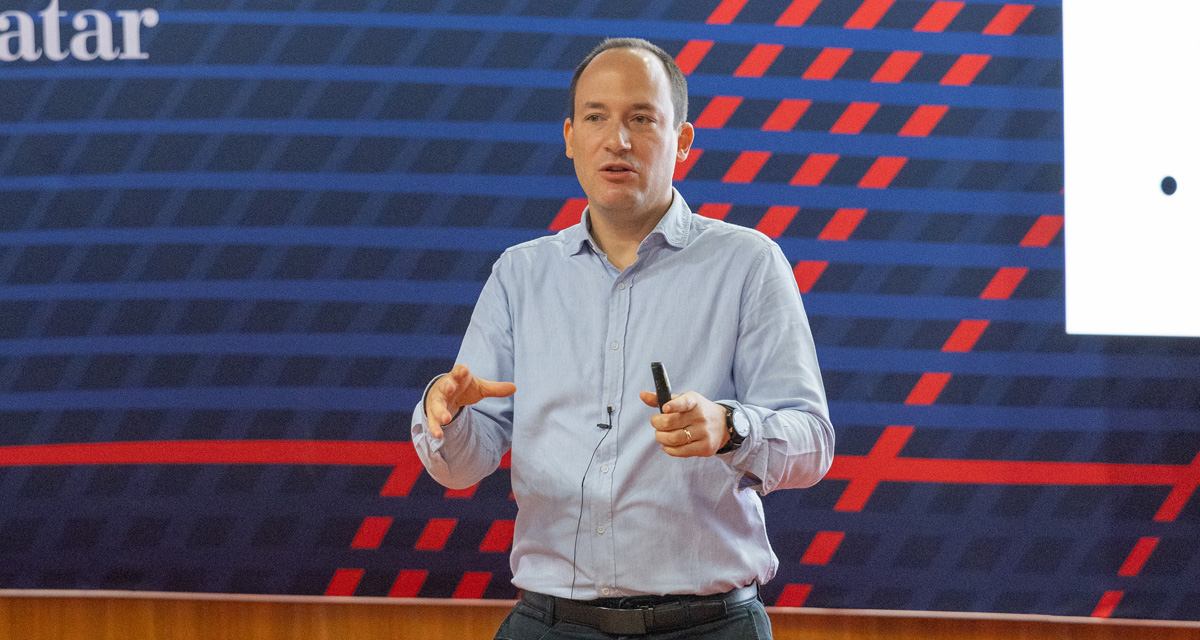
“What I like about this course is that students work together with industry mentors,” says Eduardo Feo-Flushing, CMU-Q assistant teaching professor of computer science and a co-instructor for the course. “Students learn to work collaboratively, on real-world projects, and alongside professional programmers.”
The course was co-taught by Stephen Walli, principal program manager in the Azure Office of the CTO at Microsoft, and Austin Henley, associate teaching professor at CMU’s Software and Societal Systems Department.
Open source software is a cornerstone of modern technology development, and it is based on publicly accessible code that anyone can view, modify, and distribute. Open source is the foundational building block for a vast amount of the world’s digital infrastructure. Its collaborative nature allows for rapid innovation, as developers globally can contribute improvements, fix bugs, and adapt the software for new purposes.
This year, the course expanded to a cross-campus format, with 32 students from both the Qatar and Pittsburgh campuses forming distributed teams. The students come from a variety of academic backgrounds, and this intentional mix of disciplines mirrors the cross-functional teams found in the tech industry.
These contributions are not just for a grade; they are public and visible. “They actually write code that is integrated into software that, in some projects, thousands of companies are currently using,” Feo-Flushing emphasizes.
The value of this hands-on experience is immense, and students who take the course often continue to contribute to their projects as active members of the open source community.