Summary
Researchers at Carnegie Mellon University in Qatar published a review paper in the International Journal of Molecular Sciences to investigate why colorectal cancer resists PARP inhibitor therapies, proposing potential mechanisms for cancer cell metabolic re-wiring and DNA damage repair that may lead to more effective treatments.
DOHA, QATAR — Researchers at Carnegie Mellon University in Qatar (CMU-Q) have published a comprehensive review paper in the International Journal of Molecular Sciences, detailing novel insights into why colorectal cancer resists standard targeted therapies and offering strategies to overcome this resistance.
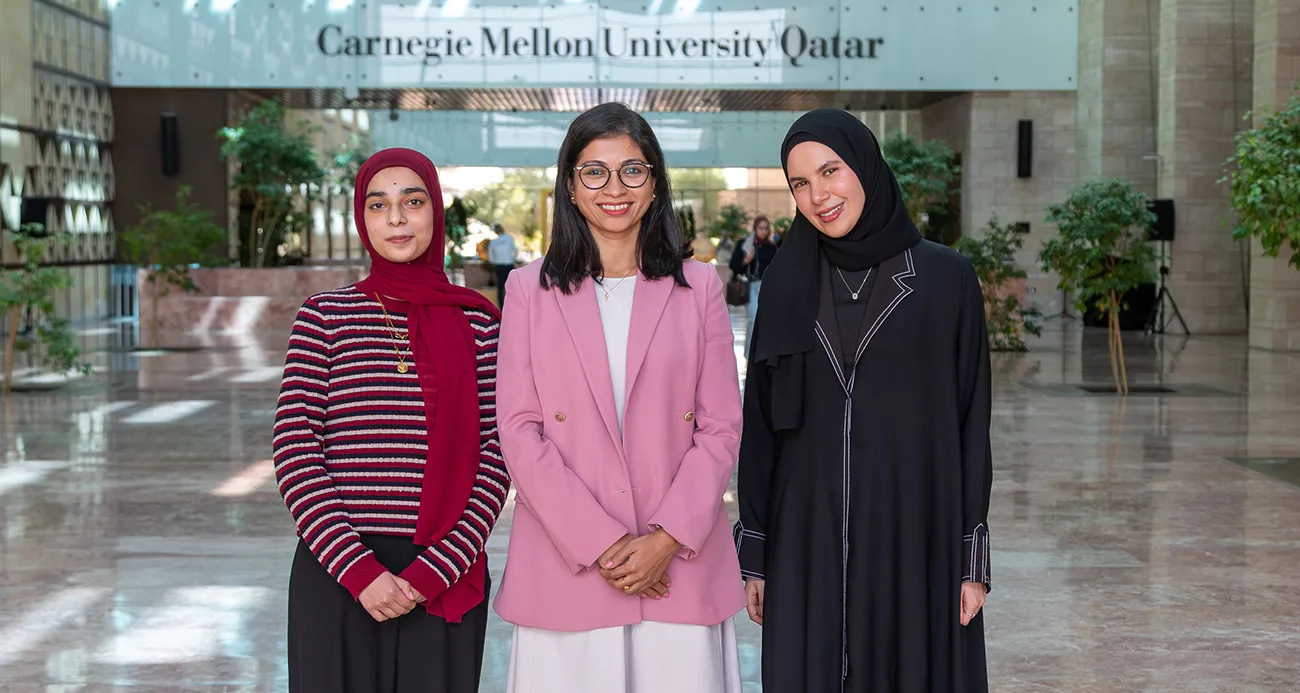
Led by Adviti Naik, assistant teaching professor of biological sciences at CMU-Q, the publication was co-authored by Eman Masood, a senior biological sciences student, and Mariam Elesnawy, a CMU-Q alumna who contributed to the project and provided mentorship throughout the writing process.
The research team set out to investigate why colorectal cancer cells remain resilient against PARP inhibitors, a highly successful class of drugs used to treat cancers with BRCA gene mutations, such as breast, ovarian, and prostate cancers.
In cancers with BRCA mutations, standard DNA repair mechanisms are already impaired. When PARP inhibitors block alternative repair pathways, the accumulated DNA damage reaches a threshold that destroys the cancer cells.
Preliminary findings from Naik’s lab suggest that resistant colorectal cancer cells possess a unique metabolic framework potentially linked to DNA damage repair. This metabolic re-wiring may influence their ability to respond to DNA damage and survive treatment..
“By understanding how these cells resist treatment, we can propose targeted combination therapies—essentially a ‘double hit’ strategy—to sensitize colorectal tumors to PARP inhibitors,” explained Naik.
Beyond the scientific contributions, the yearlong project provided Masood with a complete, hands-on experience in academic publishing.
“The goal was not just to read the literature, but to synthesize links across studies, identify critical gaps, and see where our lab’s experimental work fits into the broader field,” Naik noted.
The Biological Sciences program at CMU-Q emphasizes research, and students have the opportunity to participate in projects beginning in their first year of studies. Many students go on to complete a college honors thesis in their final year.